Demystifying AI Integration
When business owners hear the term "AI integration," many picture complex robot systems or science-fiction technology that is years away from being practical. The reality is far more grounded — and far more useful.
AI integration simply means connecting intelligent software tools to your existing business processes and systems so they can handle tasks that previously required manual human effort. It is not about replacing your business with robots. It is about making the tools and systems you already use work smarter.
What AI Integration Looks Like in Practice
Here are real examples of what AI integration means for a New Zealand business:
For a Trades Business
A plumbing or electrical company receives dozens of enquiries every week via phone, email and their website. AI integration could mean an intelligent system that automatically reads incoming enquiries, categorises them by urgency and type, sends immediate acknowledgement to the customer, and routes the details to the right team member — all within seconds.
For a Professional Services Firm
An accounting or legal practice handles hundreds of documents every month. AI integration could mean a system that automatically reads incoming documents, extracts key information, files them in the correct location and flags anything that needs human attention.
For a Retail or E-commerce Business
A shop or online store answers the same product questions repeatedly. AI integration could mean a customer-facing AI assistant that knows your entire product catalogue, can answer detailed questions about specifications, availability and pricing, and can guide customers through the purchasing process.
For a Property Management Company
A property manager coordinates maintenance, tenant communications and inspections. AI integration could mean automated tenant communication workflows, intelligent maintenance request routing and AI-generated inspection reports.
The Technical Reality
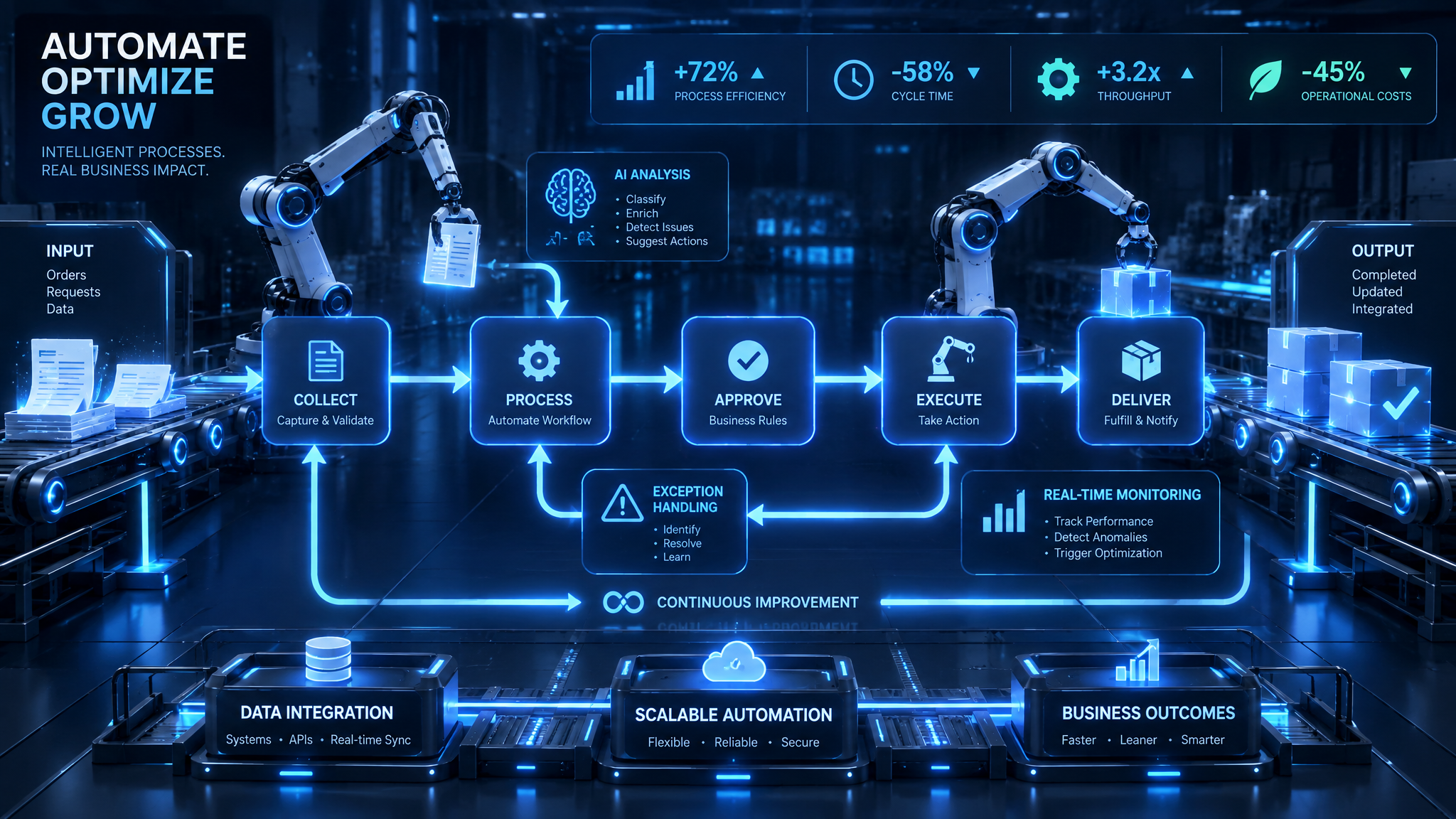
Behind the scenes, AI integration typically involves:
1. Connecting to your existing systems — your website, CRM, email, accounting software, booking system or whatever tools you already use
2. Adding an AI processing layer that can understand, categorise and act on information
3. Creating automated workflows that trigger the right actions based on what the AI determines
4. Building dashboards or notifications so your team can monitor what is happening and step in when needed
The key point is that AI integration works with your existing business infrastructure. You do not need to replace everything you currently use.
Common Misconceptions
"It will be too expensive for my business."
Modern AI tools have reduced costs dramatically. Many practical AI integrations are comparable to hiring a part-time staff member — except the AI works 24/7 without breaks.
"My business is too small for AI."
Small businesses often benefit the most because the time savings are proportionally larger. A five-person company saving 10 hours per week through automation is significant.
"I will need to hire a technical person."
A well-implemented AI integration should be designed for your existing team to use. The technical work happens during implementation — not in your day-to-day operations.
"AI will make mistakes and upset my customers."
Properly designed AI solutions include human escalation paths. The AI handles routine tasks it can do well, and passes anything unusual to your team.
How to Know If AI Integration Is Right for Your Business
Consider AI integration if:
Taking the First Step
The best way to explore AI integration is to start with a conversation. Describe the challenges in your business and what you wish could be easier or faster. An experienced AI integration partner can then assess whether AI is a good fit and recommend practical solutions.
At HMS Developments New Zealand, we specialise in practical AI integration for New Zealand businesses. We focus on solutions that deliver measurable results without unnecessary complexity.
Tell us what challenges your business faces. We will assess whether AI integration could help — obligation-free.